Ever opened your inbox on a Monday morning, sent an urgent email, and received an instant reply saying “OOO”? Your heart probably sank a little. That three-letter acronym has become one of the most recognized terms in digital communication today. But what does OOO truly mean, and why does it matter so much in our always-connected world?
The Out of Office meaning goes far beyond a simple auto-reply message. It represents boundaries, respect, and the ongoing battle for work-life balance in modern professional settings. Whether you’re a seasoned corporate professional or just entering the workforce, understanding OOO and its cultural significance can transform how you communicate.
Let’s decode everything about this powerful little acronym.
What Does “OOO” Mean?
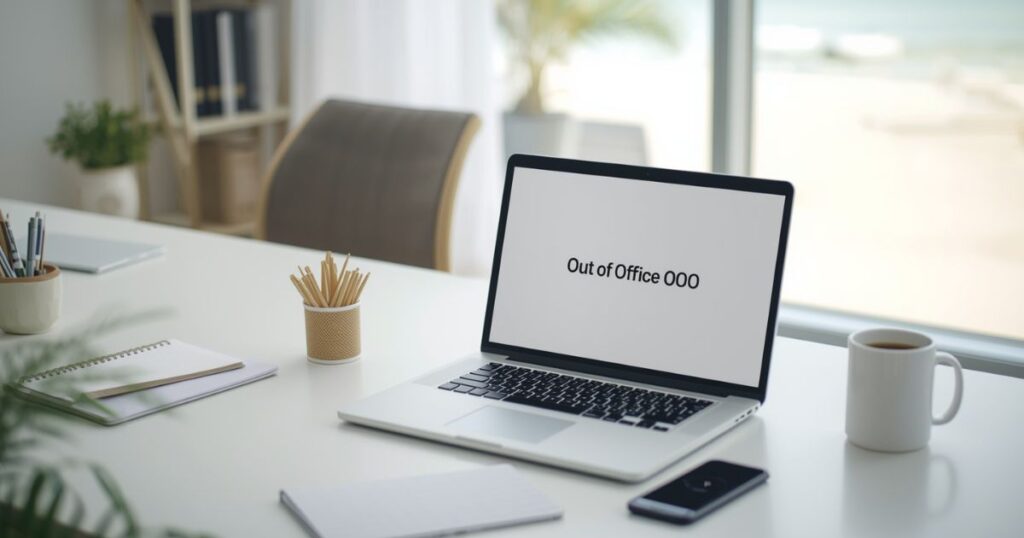
OOO stands for “Out of Office.” Simple enough, right? This workplace communication term signals temporary unavailability from work duties. When someone sets an OOO status, they’re telling colleagues they won’t respond to emails, messages, or calls during a specific period.
The OOO status explanation is straightforward. It’s a digital-age communication efficiency tool. Instead of personally informing every colleague about your vacation or sick leave, you set an automatic email response that does the work for you. Modern email platforms like Outlook, Gmail, and collaboration tools like Slack make this incredibly easy.
But here’s what makes it fascinating: OOO has evolved beyond strictly professional boundaries. Young professionals use it on Instagram captions. Remote workers apply it across multiple messaging platforms. The term has infiltrated our casual vocabulary, representing any intentional disconnection from digital demands.
Think about it. When was the last time you announced you’d be “OOO from group chats” during a weekend getaway? That’s the professional availability status terminology bleeding into everyday life. This evolution tells us something important about how work culture shapes our language.
The Origin and Evolution of “OOO”
The story of OOO begins long before smartphones existed. In pre-digital workplaces, employees left handwritten notes on their desks. Receptionists manually informed callers about absences. The process was painfully inefficient but necessary.
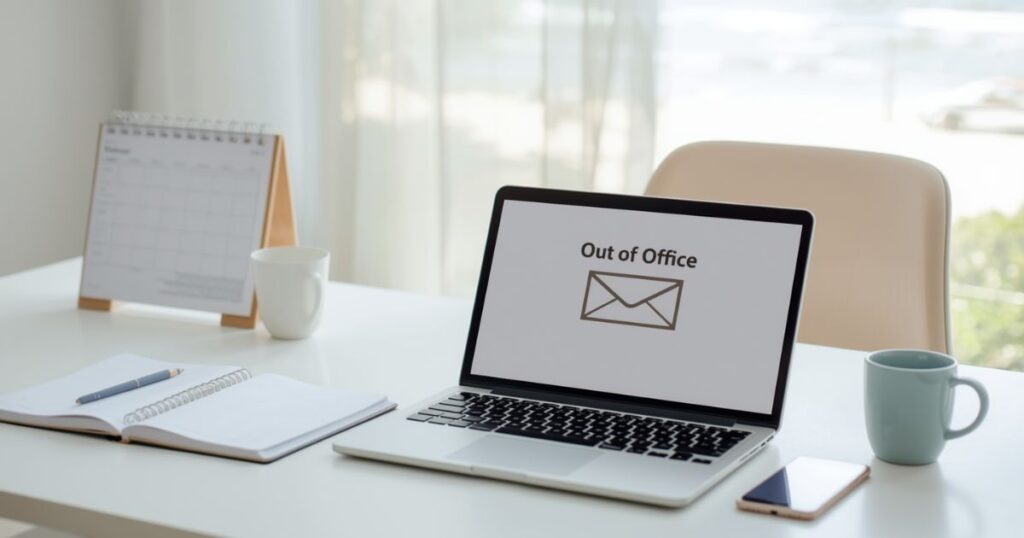
Everything changed with email’s corporate adoption in the 1990s. Early email systems introduced auto-reply features that revolutionized workplace absence notifications. Microsoft Outlook played a particularly crucial role in popularizing the OOO message format. By the early 2000s, setting an “Out of Office” reply became standard professional etiquette.
The real transformation happened with mobile technology. Suddenly, people could work from anywhere. This accessibility created new problems: How do you establish boundaries when your office fits in your pocket? The answer was embracing and reinforcing OOO practices.
Then COVID-19 changed everything. The pandemic forced millions into remote work almost overnight. Home became office. Living rooms turned into conference rooms. The lines between personal and professional life blurred dramatically. OOO messages became essential tools for maintaining sanity in this new reality.
Today’s hybrid work culture has made OOO more important than ever. We’re not just using it for vacations anymore. Mental health days, personal errands, digital detox periods all receive the same OOO designation. This evolution reflects our growing understanding that rest isn’t optional; it’s necessary.
Is “OOO” a Slang, Acronym, or Name?
Let’s clear up the confusion. OOO is primarily an acronym specifically, an initialism where you pronounce each letter separately. Each “O” represents a word: Out. Of. Office.
It’s not traditional slang, though younger generations have adopted it playfully. When your friend texts “I’m basically OOO all weekend,” they’re using corporate language informally. That’s how modern office communication slang enters casual conversation. It’s also definitely not a name, despite sounding like someone expressing surprise!
Here’s where it gets interesting: context determines classification. In professional settings, OOO remains strictly a corporate communication acronym. In meme culture or social media, it can become playful slang. On Instagram or Twitter, it might accompany vacation photos as shorthand for “living my best unavailable life.”
The linguistic flexibility demonstrates how digital communication constantly evolves. What starts as business email phrases usage can quickly become part of everyday vocabulary. That’s the power of workplace terminology in shaping modern language.
| Context | Classification | Example |
|---|---|---|
| Professional Email | Acronym/Initialism | “Setting OOO reply for next week” |
| Social Media | Casual Slang | “Going OOO from reality! 🏖️” |
| Text Message | Informal Shorthand | “Can’t tonight, I’m OOO” |
“OOO” Pronunciation & Spelling
OOO Pronunciation
Most people say “oh-oh-oh” pronouncing each letter individually. Some regions prefer “triple-O,” which sounds slightly more efficient. In casual conversation, you might hear “ooo” (rhymes with “boo”), especially when used as an exclamation rather than the workplace term.
Professional settings demand clarity. Stick with “oh-oh-oh” during business calls or meetings. It avoids confusion and maintains that professional tone everyone expects in corporate communication.
OOO Spelling
Standard format uses all capital letters: OOO. This follows typical acronym conventions. You’ll occasionally see lowercase “ooo” in informal contexts like text messages or social media captions, but it looks unprofessional in workplace communication.
The old-school format with periods (O.O.O.) has essentially disappeared. It feels outdated and unnecessarily formal. Modern digital communication etiquette favors clean, simple acronyms without punctuation.
Common misspellings include Ooo, ooO, or OoO. These inconsistencies create visual confusion. When you’re setting your email auto-reply message, stick with the standard OOO format. Consistency communicates professionalism.
How People Use “OOO” Today
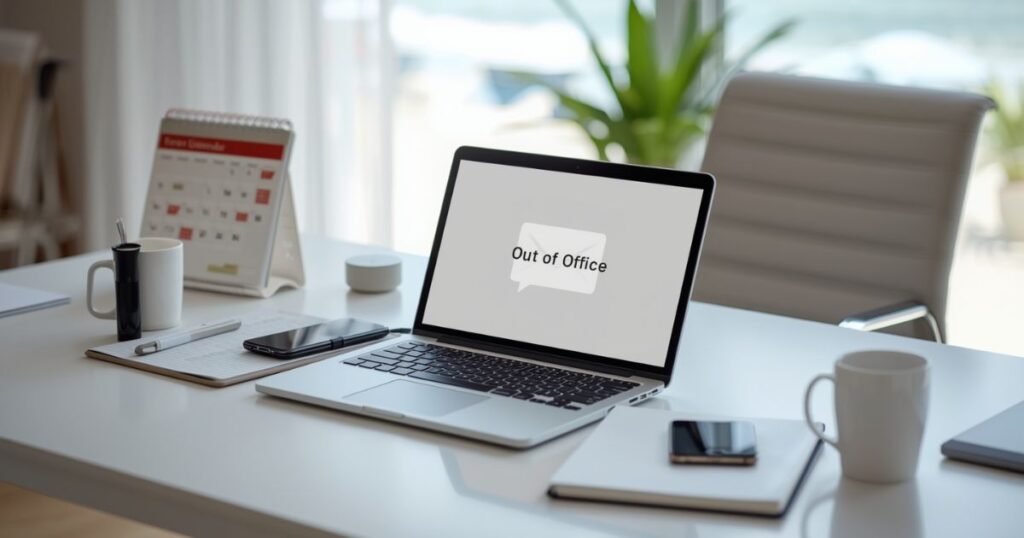
Workplace Communication
The email auto-reply message remains OOO’s primary function. Setting it properly involves several key elements that demonstrate professional competence:
Essential components include:
- Clear return date (no vague “back soon” messages)
- Alternative contact person for urgent matters
- Brief explanation without oversharing personal details
- Professional tone appropriate for your industry
- Information about limited or no access
Sarah, a marketing manager, sets her OOO every Friday afternoon before vacation. Her message reads: “Thank you for your email. I’m out of office until Monday, March 10th with limited access. For urgent matters, please contact John Smith at john@company.com.” Simple, clear, effective.
Social Media & Informal Use
Instagram and Twitter have embraced OOO enthusiastically. Scroll through vacation posts and you’ll find countless captions: “OOO vibes only ✨” or “Officially OOO for the next week!” This casual adoption shows how workplace boundaries language has infiltrated personal expression.
Slack status meanings have become particularly creative. Remote workers coordinate OOO across multiple platforms. Their Slack shows “🌴 OOO – Back Monday.” Their email auto-replies. Their calendar blocks out time. This multi-platform coordination represents modern digital etiquette at its finest.
TikTok trends incorporate OOO in humorous ways. Videos show people dramatically setting OOO messages, celebrating that moment of freedom. This playful relationship with workplace terminology demonstrates how younger workers process corporate culture through humor.
Cultural Variations
American workplace norms treat OOO as expected courtesy. European colleagues often take longer holidays with extended OOO periods and nobody bats an eye. In countries with stronger work-life balance protections, OOO represents legal rights, not just professional courtesy.
Asian business cultures show interesting variations. Hierarchical structures influence how people phrase OOO messages. Younger workers in Tokyo or Seoul might seek manager approval before setting even brief OOO statuses. This contrasts sharply with Silicon Valley’s casual approach.
Global workplace terminology requires cultural sensitivity. What seems perfectly acceptable in one region might appear rude elsewhere. Understanding these nuances becomes crucial in remote team communication spanning multiple continents.
Mental Health & Boundaries
Here’s where OOO gets really important. The term has become a mental health at work tool. Setting OOO for a mental health day normalizes rest and recovery. It tells colleagues: “I need space, and that’s okay.”
Workplace mental health awareness has transformed OOO from vacation-only to include:
- Mental health days without detailed explanations
- Digital detox periods to prevent burnout
- Personal wellness appointments
- Family emergency response time
- Preventative rest before exhaustion hits
Therapists and wellness coaches now encourage assertive OOO usage. Dr. Emma Rodriguez, a workplace psychologist, notes: “Setting clear OOO boundaries isn’t selfishness it’s self-preservation. Employees who protect their off-time perform better when they’re on.”
Examples of “OOO” in a Sentence
Email Examples
- “I’m currently OOO until Monday, returning March 5th.”
- “Please note my OOO status through the holiday week.”
- “Setting up my OOO message before I leave today.”
- “Did you receive my OOO notification yesterday?”
- “I’ll be OOO for two weeks during vacation.”
Work Chat Examples
- “Going OOO for lunch back in 45 minutes!”
- “Remember to mark yourself OOO in the system.”
- “She’s OOO today for doctor appointments.”
- “Check the team’s OOO schedule before scheduling meetings.”
- “Don’t forget updating your Slack away message to OOO.”
Informal Examples
- “I’m basically OOO all weekend from group texts.”
- “Going OOO from social media tonight need a break.”
- “My phone’s on OOO mode after 8 PM always.”
- “Declaring myself OOO from all work-related thoughts!”
- “Weekend plans? Definitely OOO from everything digital.”
Social Media Captions
- “Beach mode activated 🏖️ Officially OOO for real!”
- “OOO but obviously still posting vacation content daily”
- “#OOO #DigitalDetox #SelfCareIsntSelfish”
- “When that OOO message goes up 😌✨”
- “OOO vibes only for the entire week ahead”
Read This Post: Exploring The Meaning And Uses Of “Splooge Bath”
Other Possible Meanings of “OOO”
Context always determines meaning. While Out of Office dominates workplace communication, other interpretations exist:
Tech & Internet Meanings
- 000: Emergency number in Australia and parts of Europe
- Object-Oriented Ontology: Philosophy and tech terminology
- OpenOffice: File format designation
- Error codes in certain software systems
Business Variations
- Out of Order: Equipment malfunction status
- Out of Options: Negotiation deadlock terminology
- Order of Operations: Business process management
- Out of Orbit: Figurative expression meaning completely off-track
Creative Interpretations
In music, “ooo” serves as a common sound effect. Gaming communities use similar status indicators. Fashion brands occasionally incorporate OOO into collection names. The digital language evolution allows endless creative interpretations.
How do you identify the correct meaning? Look at surrounding context. An email subject line clearly indicates workplace usage. A software error message suggests technical terminology. Platform and industry provide essential clues.
Words and Acronyms Related to “OOO”
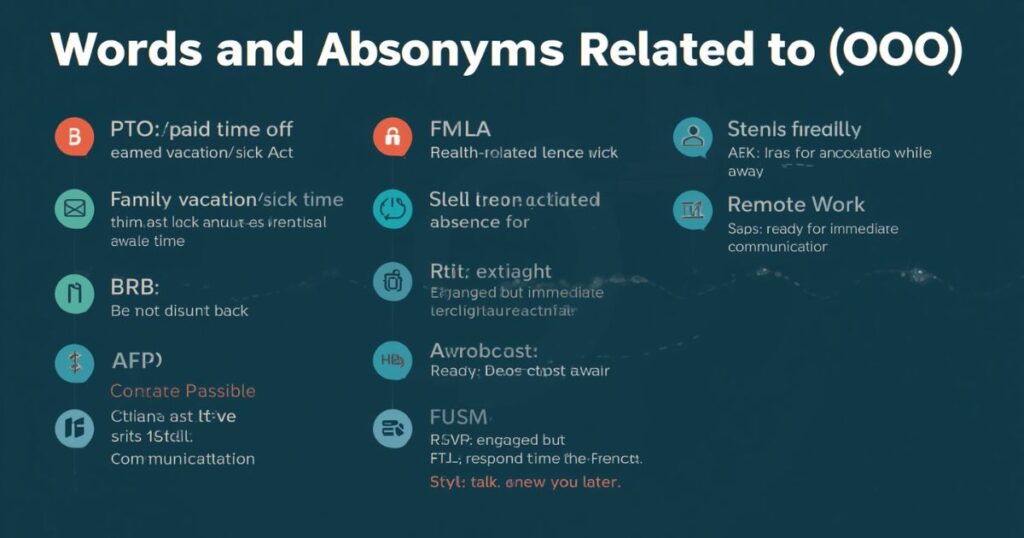
Understanding corporate communication acronyms helps navigate modern workplaces effectively:
Workplace Absence Terms
- PTO: Paid Time Off (earned vacation/sick time)
- FMLA: Family and Medical Leave Act
- LOA: Leave of Absence (extended time away)
- Sick Leave: Health-related absence
- Remote Work: Location flexibility while working
Status & Availability
- AFK: Away From Keyboard
- BRB: Be Right Back
- DND: Do Not Disturb mode
- Available: Ready for immediate communication
- Busy: Engaged but potentially reachable
Communication Acronyms
- ASAP: As Soon As Possible
- FYI: For Your Information
- ETA: Estimated Time of Arrival
- RSVP: Respond if attending (from French)
- TTYL: Talk To You Later
| Term | Best Used For | Response Expected |
|---|---|---|
| OOO | Complete absence | No/after return |
| AFK | Brief break | Yes/soon |
| DND | Focus time | Urgent only |
| Busy | Working on tasks | Within hours |
Is “OOO” in the Dictionary?
You won’t find OOO in traditional dictionaries like Merriam-Webster or Oxford English Dictionary yet. These institutions move slowly, carefully documenting language changes before granting official status. But that doesn’t diminish OOO’s legitimacy.
Urban Dictionary includes multiple OOO definitions. Business dictionaries increasingly recognize the term. Professional style guides like the Associated Press Stylebook acknowledge its workplace usage. The term exists in that interesting liminal space universally understood but not yet formally canonized.
Why does dictionary inclusion matter? It legitimizes digital language evolution. It helps non-native English speakers navigate workplace communication. It documents cultural shifts happening in real-time. Language reflects how we live, work, and connect.
Similar terms followed this path. “Email” took years to enter dictionaries. “Google” as a verb faced initial resistance. Now both feel completely natural. OOO will likely achieve official recognition within the next several years as corporate communication phrases continue solidifying.
The linguistic timeline for digital terms typically spans 10-15 years from widespread adoption to dictionary inclusion. OOO hit mainstream usage around 2010. We’re approaching that recognition threshold now.
Here’s what’s fascinating: dictionaries don’t determine language people do. You’re using OOO correctly whether Merriam-Webster approves or not. That’s how living languages work.
Better Alternatives to Say “OOO”
Formal Alternatives
Professional situations demand clear, respectful language:
- “Currently unavailable until [specific date and time]”
- “Out of office with extremely limited access”
- “Away from desk temporarily for personal matters”
- “On approved leave through end of week”
- “Not monitoring email during this designated period”
Casual Alternatives
Friends and family deserve less corporate language:
- “Taking a break from my phone this weekend!”
- “Off the grid for a bit talk soon”
- “Unplugging to recharge myself properly”
- “On full vacation mode right now”
- “Not checking messages today at all”
Creative Options
Sometimes personality belongs in professional communication:
- “Gone fishing (maybe literally this time!)”
- “Temporarily retired from adult responsibilities completely”
- “Currently exploring the actual offline world”
- “My calendar and I have separated amicably”
- “Living my best unavailable life currently”
Context matters tremendously. Conservative industries prefer straightforward alternatives. Creative fields allow personality. When uncertain, choose clarity over cleverness.
Cultural and Generational Impact of “OOO”
Workplace Culture Differences
Corporate America expects detailed OOO messages with alternative contacts. Startup cultures embrace casual Slack statuses. European workplaces normalize month-long OOO periods without guilt. These cultural communication differences shape how we understand availability.
Generational Communication Styles
Millennials pioneered OOO as a boundary-setting tool. They watched their parents work through vacations and said “never again.” This generation transformed OOO from apologetic to assertive.
Gen Z takes it further. They set OOO for mental health days without elaborate explanations. Their approach: “I’m unavailable. That’s enough information.” This emotional unavailability slang shift represents progress toward healthier workplace norms.
Older generations still sometimes view frequent OOO usage skeptically. They remember when dedication meant accessibility. Bridging these generational communication styles requires patience and education on both sides.
Why It’s Important to Know These Words
Understanding modern workplace etiquette isn’t just nice it’s essential. Knowing when and how to use OOO properly:
- Prevents misunderstandings about your availability completely
- Demonstrates professional competence in digital communication
- Protects your mental health through clear boundaries
- Respects others’ time by setting realistic expectations
- Builds career credibility through effective communication
In remote work environments, clear status communication becomes absolutely critical. Your colleagues can’t see you’re gone. They rely entirely on your OOO messages. Master this simple tool, and you’ll prevent countless frustrating miscommunications.
Frequently Asked Questions
What does OOO mean in text messages?
OOO typically means Out of Office, even in casual texts. Context determines whether it’s workplace-related or just indicating unavailability.
Should I check emails while OOO?
No. True disconnection supports mental health best. Your OOO implies complete unavailability.
Can I use OOO for mental health days?
Absolutely! Mental health deserves equal respect. Say “Out of office for personal wellness” without elaborate explanations.
Is it unprofessional to use creative OOO messages?Company culture determines this. Conservative industries prefer straightforward language. Creative fields welcome personality.
What’s the difference between OOO and AFK?
OOO means completely away from work. AFK (Away From Keyboard) suggests a brief break with expected return soon.
Conclusion
The humble three-letter acronym OOO carries enormous weight in modern communication. It represents more than vacation notifications it symbolizes our collective struggle for work-life balance in an always-connected world.
Understanding OOO meaning, usage, and cultural significance empowers you professionally. It helps you set boundaries confidently. It demonstrates digital communication competence. Most importantly, it protects your wellbeing.
Next time you plan time off, set that OOO message without guilt. You’ve earned rest. Your boundaries deserve respect. Master these workplace communication terms, and watch your professional relationships improve dramatically.
The evolution of workplace language continues. Stay curious, stay informed, and remember: sometimes the most productive thing you can do is confidently declare yourself Out of Office.

Flairsy is the word expert behind Englishfixerr.com, helping readers find the perfect synonyms and simple word choices. With a love for clarity and creativity, Flairsy makes English easy and stylish. From tricky terms to everyday phrases, he turns confusion into confidence.