
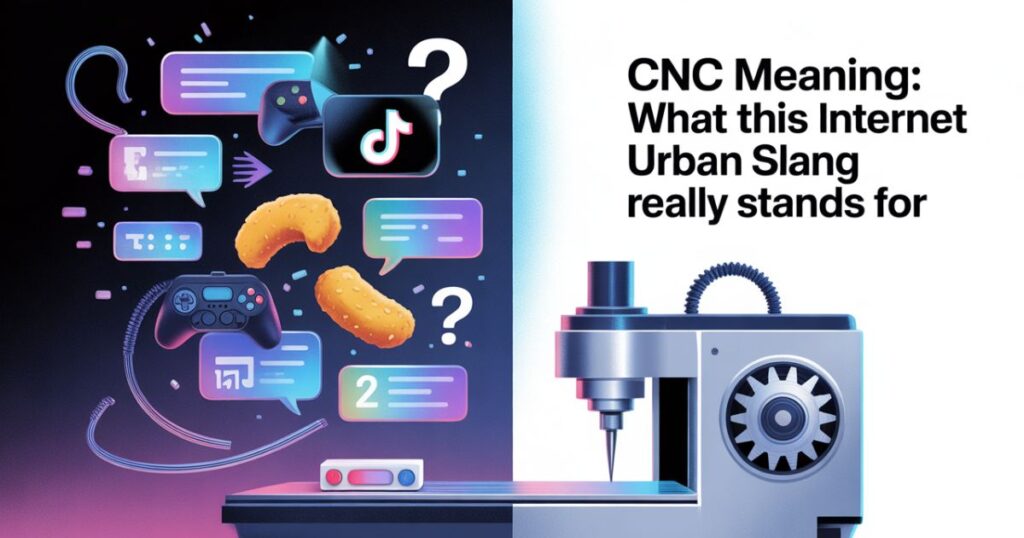
You’re scrolling through TikTok when suddenly CNC pops up everywhere. Your brain immediately jumps to manufacturing class those computer-controlled machines, right? But the comments suggest something entirely different. Welcome to the wonderfully confusing world of internet acronyms, where three little letters carry wildly different meanings depending on where you stumble upon them.
Let’s crack this code together.
What’s the Deal with CNC?
Here’s the thing about modern digital communication. We love our shortcuts. Acronyms rule the internet. But CNC takes abbreviation confusion to championship levels. One minute you’re discussing precision manufacturing. The next, you’ve wandered into BDSM territory. Then someone mentions chicken nuggets, and you’re completely lost.
The confusion isn’t your fault. Context determines everything with this particular acronym. Understanding when CNC means what requires reading the room or the chat, thread, or video caption. Miss those contextual clues? You might find yourself seriously embarrassed.
What does CNC stand for?
Let’s lay out the major players:
- Consensual Non-Consent (BDSM and intimate relationships)
- Computer Numerical Control (manufacturing and industrial technology)
- Chicken Nugget Cult (internet meme culture)
- Certified Nice Chick/Guy (social media slang)
- Various other meanings in specific communities
Each definition lives in its own universe. Gaming communities use CNC differently than manufacturing professionals. TikTok trends don’t align with Urban Dictionary entries. The acronym evolved across multiple spaces simultaneously, creating this beautiful mess of meanings.
CNC Urban Dictionary: Where Internet Slang Gets Defined

Urban Dictionary serves as the internet’s unofficial slang encyclopedia. Type “CNC” into the search bar, and you’ll find definitions ranging from explicit to wholesome. User-generated content means definitions evolve constantly, reflecting how communities actually use terms.
The top definition? Usually consensual non-consent in BDSM contexts. But scroll down. You’ll discover Chicken Nugget Cult references, gaming terminology, and dozens of creative interpretations people invented. Urban Dictionary captures language as it happens, not as dictionaries wish it would behave.
This platform shows how CNC slang meaning shifts across demographics. Younger users might define it completely differently than older generations. Geographic location matters too. What’s trending on TikTok today might mean nothing on manufacturing forums.
What Is CNC Play?
Now we’re entering adult territory. CNC roleplay refers to consensual non-consent scenarios within BDSM relationships. This requires clear explanation because misunderstanding this concept causes significant harm.
Consensual non-consent involves partners agreeing beforehand to roleplay scenarios that simulate forced situations. Everything happens within pre-negotiated boundaries. Both people consent to the fantasy that’s the “consensual” part. The “non-consent” describes the roleplay dynamic, not reality.
Critical distinction here: CNC is not actual assault. Every action receives advance approval. Safe words exist. Communication flows constantly. Partners trust each other completely. Remove any of these elements? You no longer have consensual non-consent. You have assault.
Key Aspects of CNC Play:
Explicit Consent and Negotiation forms the foundation. Partners discuss specific scenarios, boundaries, and actions before anything physical happens. They establish what’s acceptable and what crosses lines. These conversations happen while everyone’s fully clothed and clear-headed. Written agreements sometimes formalize these discussions.
Trust and Communication cannot be overstated. CNC scenes require deeper trust than most intimate activities. Partners must communicate their mental and emotional states throughout. Check-ins happen before, during, and after scenes. One partner feeling uncomfortable? Everything stops immediately.
Fantasy vs. Reality Distinction stays crystal clear. Participants understand they’re engaging in roleplay within agreed parameters. The simulation never becomes actual non-consent. Both people maintain awareness that they’re acting out a fantasy with someone they trust.
Safety Measures and Aftercare protect everyone involved. Safe words like “red” mean immediate cessation. Physical safety precautions prevent actual harm. Afterward, aftercare addresses emotional and psychological needs. Partners reconnect as themselves, not their roleplayed characters.
Criticisms of Consensual Non-Consent
Consensual non-consent sparks intense debate. Critics raise legitimate concerns worth examining honestly.
1. Makes Light of Sexual Assault or Trauma
Some argue CNC trivializes real sexual violence. Survivors worry that normalizing these fantasies diminishes actual assault’s severity. The concern? Society might struggle distinguishing between fantasy and criminal behavior. Practitioners counter that their private activities don’t minimize others’ trauma, and consenting adults shouldn’t face judgment for explored fantasies.
2. Potential to Overstep Boundaries
Even with negotiation, boundaries can blur during scenes. Miscommunication happens. Someone might push further than discussed. The psychological intensity sometimes makes participants hesitate using safe words. These risks require constant vigilance and honest communication afterward.
3. One-Sided Power Dynamics
Real-world power imbalances can seep into scenes. If one partner holds financial power or social influence, can the other truly consent freely? Critics worry existing relationship dynamics might pressure someone into CNC participation. Healthy CNC requires equal footing outside the bedroom.
4. Reinforces Harmful Gender Stereotypes
Traditional CNC often involves men in dominant roles and women submissive. This mirrors patriarchal ideas about gender and sexuality. Critics suggest it perpetuates heteronormativity and outdated gender roles. Supporters note that many flip these dynamics, with women dominating or same-gender couples participating.
5. Blurred Lines Between Fantasy and Reality
Where does roleplaying stop and reality begin? Some worry participants might confuse fantasy with genuine desire. Psychological triggers from past trauma might surface unexpectedly. The emotional intensity can create confusion about what someone actually wants versus what they’re exploring safely.
6. Stigmatization of BDSM & CNC Practitioners
Society judges kinky people harshly. CNC practitioners face particular stigma because their interests seem most extreme. This judgment affects careers, relationships, and mental health. People hide their private lives fearing discrimination. The stigmatization itself causes harm.
7. Risk of Emotional or Psychological Harm
CNC scenes can trigger unexpected emotional responses. Someone might discover trauma they’d forgotten. Psychological distress can emerge days later. Without proper aftercare and mental health awareness, participants risk genuine harm. These activities require emotional maturity and self-awareness.
CNC: Not Just for Kink
Here’s where things get interesting. CNC extends far beyond bedrooms. The acronym pops up in manufacturing plants, gaming communities, and internet memes. Understanding these other meanings prevents awkward misunderstandings.
Different contexts require different interpretations. Someone discussing CNC machines isn’t talking about roleplay. Gaming communities reference entirely separate concepts. Internet slang evolves its own meanings independently.
CNC in BDSM: Consensual Non-Consent
Let’s dive deeper into the BDSM context since it generates most online discussion.
Key Features of CNC Play
| Feature | Description | Importance |
|---|---|---|
| Pre-negotiation | Detailed discussions before scenes | Essential for safety |
| Safe words | Signals to pause or stop | Non-negotiable requirement |
| Boundaries | Clear limits on actions | Protects both partners |
| Aftercare | Post-scene emotional support | Prevents psychological harm |
| Ongoing consent | Ability to withdraw anytime | Maintains ethical foundation |
The CNC scene negotiation process involves documenting scenarios, discussing psychological triggers, and establishing emergency protocols. Partners share medical conditions, emotional boundaries, and potential trauma responses. This isn’t spontaneous it’s carefully orchestrated.
Why Do People Engage in CNC?
Psychological reasons vary widely. Some explore power exchange dynamics safely. Others process past trauma through controlled reenactment with trusted partners. The consensual fantasy roleplay allows experimentation without real danger.
Trust-building motivates many couples. Successfully navigating CNC requires profound trust and communication. Partners who manage these scenes often report stronger emotional connections. The vulnerability creates intimacy.
Personal autonomy matters too. Choosing to explore fantasies even uncomfortable ones represents sexual agency. Consenting adults deciding how they express intimacy shouldn’t require justification. The emphasis on BDSM boundaries and communication actually promotes healthier relationships.
Criticism & Ethical Concerns
Beyond individual criticisms, broader ethical questions persist. Does CNC contribute to rape culture? Can it ever be truly consensual given societal power structures? These debates lack easy answers.
Mental health professionals debate whether CNC helps or harms trauma survivors. Some therapists view it as potentially therapeutic. Others worry it retraumatizes. Research remains limited, leaving practitioners navigating uncertain terrain.
The CNC ethical concerns extend to how society discusses these practices. Sex-positive approaches clash with feminist critiques. Finding middle ground requires nuance often missing from online debates.
CNC vs. Rape: The Crucial Difference
This cannot be emphasized enough: consensual non-consent is NOT rape.
| Aspect | CNC | Rape |
|---|---|---|
| Consent | Given freely beforehand | Absent entirely |
| Safe words | Agreed upon and respected | Don’t exist |
| Negotiation | Detailed pre-scene discussion | No discussion |
| Trust | Required foundation | Violation of trust |
| Legal status | Legal between consenting adults | Criminal act |
| Aftermath | Aftercare and connection | Trauma and harm |
Rape involves actual non-consent. Someone forces actions on another person against their will. CNC vs rape difference centers entirely on mutual consent and pre-agreement. Conflating them trivializes sexual violence and misrepresents consensual activities.
CNC in Manufacturing: Computer Numerical Control
Completely different universe here. CNC machining revolutionized manufacturing through computer automation.
How CNC Works
Computer Numerical Control uses software to operate machine tools. Designers create parts using CAD software. That design converts to G-code programming the language CNC machines understand. The computer then controls cutting tools with extraordinary precision.
The CAD/CAM workflow eliminates human error in repetitive tasks. One programmed design produces identical parts thousands of times. Manual machining can’t match this consistency.
Types of CNC Machines
CNC milling machines remove material using rotating cutters. They create complex shapes and patterns. Manufacturing relies heavily on these versatile machines.
CNC lathes rotate workpieces while cutting tools shape them. Perfect for cylindrical parts like shafts and bolts.
CNC routers work with softer materials wood, plastic, foam. Woodworkers and sign makers love these machines.
Plasma cutters slice through metal using superheated plasma. Industrial fabrication depends on them.
Laser cutters provide incredibly precise cuts through focused light beams. Jewelry makers and electronics manufacturers use them extensively.
3D printers represent additive manufacturing. They build objects layer by layer rather than cutting away material.
Advantages of CNC Machining
Precision reaches levels impossible manually. Automated manufacturing produces parts within thousandths of an inch tolerances. Complex geometries that would challenge experienced machinists become routine.
Repeatability means consistency across production runs. The thousandth part matches the first exactly. Quality control becomes easier.
Efficiency increases productivity dramatically. CNC machines work continuously without fatigue. One operator can manage multiple machines simultaneously.
Cost-effectiveness emerges at scale. Initial investment seems steep, but per-unit costs drop significantly with volume.
CNC vs Manual Machining
| Factor | CNC Machining | Manual Machining |
|---|---|---|
| Precision | ±0.001″ typical | ±0.005″ typical |
| Speed | Very fast for production | Slower per piece |
| Consistency | Perfect repeatability | Varies slightly |
| Setup cost | High initial investment | Lower equipment cost |
| Skill required | Programming knowledge | Traditional machining skills |
| Flexibility | Requires reprogramming | Quick adjustments |
Manual machining still matters. Prototypes, one-off parts, and field repairs often require traditional skills. But precision manufacturing at scale demands CNC technology.
CNC as Internet Slang & Pop Culture References
Now things get weird and wonderful.
1. CNC as “Chicken Nugget Cult” (Internet Slang & Meme Culture)
Yes, really. Chicken Nugget Cult meaning emerged from food-loving internet communities. Members pledge humorous allegiance to chicken nuggets. They share nugget memes, rate fast-food offerings, and create inside jokes.
“I pledge allegiance to the CNC, one nugget under sauce!” exemplifies the playful nature. It’s wholesome compared to other CNC meanings.
2. CNC in Gaming & Streaming Communities
Gamers use CNC for “Cops ‘N’ Crooks” a game mode in Grand Theft Auto and similar titles. Streaming communities reference it when discussing these game types.
Gaming slang CNC sometimes means “Cannot Compute” in response to confusing game mechanics or unexpected events. Chat spam includes it when something mind-blowing happens.
3. CNC in Fandom Slang (Fiction & Roleplay)
Fanfiction communities use CNC as content warning tags. Stories involving consensual non-consent scenarios get labeled so readers can decide whether they’re comfortable with that content.
Fandom roleplay slang adopts terms from BDSM communities. Archive of Our Own and similar platforms require these tags for reader safety.
4. CNC as “Certified Nice Chick” (or Guy)
Social media users created this playful designation. “You’re a total CNC Certified Nice Chick!” compliments someone’s personality. It’s lighthearted banter among friends.
Dating app bios sometimes include it humorously. The self-designation signals approachability and friendliness.
5. CNC as an Acronym for “Cops ‘N’ Crooks”
Beyond gaming, this references the childhood game. Some communities use it nostalgically when discussing classic playground activities.
6. CNC in Hip-Hop & Music
Some rap lyrics mention “Cash Never Changes” abbreviated as CNC. Artists also reference “Certified Nasty Crew” in UK grime scenes. Pop culture CNC terms vary by music genre and region.
Other CNC Meanings
Certified Nutritional Consultant applies in wellness industries. Health coaches and fitness professionals hold this certification.
Canadian National Railway uses CNC as its stock ticker symbol. Financial discussions reference it in this context.
Close and Comfortable describes intimate friendships. People say they’re “CNC with someone” when they share deep connections.
Various organizations claim the acronym. Context always determines which meaning applies.
The CNC Evolution
CNC terminology evolved simultaneously across disconnected communities. Manufacturing adopted it decades ago. BDSM communities developed their usage independently. Internet slang emerged more recently.
TikTok CNC meaning exploded in 2023-2024. Educational videos about BDSM consent sparked discussions. Some creators explained consensual non-consent responsibly. Others sensationalized it for views.
Social media algorithms pushed CNC content to wider audiences. People unfamiliar with BDSM suddenly encountered these discussions. Confusion ensued when manufacturing professionals and kink educators both used identical acronyms.
The evolution continues. New meanings emerge regularly. Meme culture adapts acronyms faster than dictionaries can track.
Real Talk: Using CNC in Conversation
CNC communication tips start with reading context carefully. Manufacturing discussion? Assume computer numerical control. Adult conversation with consent themes? Probably consensual non-consent. Gaming chat? Check whether it’s Cops ‘N’ Crooks.
When uncertain, ask directly. “What does CNC mean in this context?” prevents embarrassing assumptions. Most people appreciate clarification requests.
Avoid using CNC casually without context. Specify which meaning you intend. “CNC machining” or “CNC roleplay” removes ambiguity.
What does CNC on TikTok mean?
CNC trending on TikTok typically references consensual non-consent. Educational creators discuss BDSM practices, consent culture, and relationship dynamics. Videos explaining safe CNC practices aim to destigmatize kink.
Some creators share personal CNC experiences. Others critique the practice. Comment sections become battlegrounds between sex-positive advocates and concerned critics.
Content warnings usually accompany these videos. Age restrictions apply, though teens still encounter them. Parents worry about exposure to adult content. Educators argue accurate information prevents harm.
Why is CNC trending on TikTok?
Controversy drives engagement. CNC discussions generate passionate responses both positive and negative. The algorithm pushes controversial content because it keeps users scrolling.
Consent awareness initiatives made BDSM topics less taboo. Younger generations discuss sexuality more openly than previous ones. TikTok became the platform for these conversations.
Educational content competes with sensationalized takes. Creators seeking views sometimes misrepresent practices. Responsible educators try countering misinformation, creating ongoing discussion cycles.
What does CNC stand for in chat?
CNC meaning in chat depends entirely on the community. Discord servers for manufacturing hobbyists mean computer numerical control. BDSM-focused spaces reference consensual non-consent. Gaming servers indicate Cops ‘N’ Crooks.
Dating app conversations require extra caution. Someone mentioning CNC might signal kink interests or discuss unrelated topics. Never assume always clarify.
Professional communications rarely use CNC ambiguously. Business contexts specify “CNC machining” or use full terms.
Are CNC Kink Fantasies Normal?
Short answer: Fantasy is normal. Research shows diverse sexual fantasies exist across all demographics. Interest in power dynamics, consensual resistance, or dominance/submission appears commonly.
Fantasizing differs from desiring reality. Many people harbor fantasies they’d never actually pursue. Fantasy provides safe exploration without real-world consequences.
Mental health professionals generally view consensual fantasy exploration as healthy. Problems arise when fantasies cause distress, impair functioning, or involve non-consenting parties.
Responsible kink practices involve self-awareness. Understanding why certain fantasies appeal helps people navigate them safely. Therapy can address concerns about fantasy content.
If fantasies distress you, seeking professional guidance makes sense. Therapists specializing in sexuality provide non-judgmental support.
CNC FAQs
What’s CNC mean in texting?
Context determines meaning. Manufacturing professionals text about CNC machines. Kinky couples reference roleplay. Gamers discuss game modes. Always verify which definition applies before responding.
Is CNC only about BDSM?
Absolutely not. Computer numerical control predates BDSM usage. Multiple communities claim the acronym. CNC multiple meanings coexist independently.
How do I use CNC in a conversation?
Add context immediately. Say “CNC machining” or “CNC roleplay” rather than just “CNC.” This prevents confusion and awkward clarifications.
What does CNC mean in dating?
Usually signals interest in BDSM or kink. Someone mentioning CNC in their profile likely practices consensual non-consent. This requires honest discussion about boundaries and interests before pursuing relationships.
What is CNC sexually mean?
Consensual non-consent partners roleplay scenarios involving simulated resistance or force. Everything happens with advance agreement and established safe words. Mutual consent remains paramount throughout.
What does CNC mean in books?
Fandom meaning typically applies. Authors tag books containing consensual non-consent scenarios. Reader warnings help people avoid triggering content or seek preferred themes.
Wrapping It Up
CNC demonstrates how language evolves across digital spaces. Three letters carry radically different meanings depending on context. Understanding requires attention to conversational clues and willingness to ask questions.
Whether discussing precision machining, exploring intimate fantasies, or joking about chicken nuggets, clarity prevents confusion. The acronym’s versatility reflects internet culture’s complexity.
Remember that consent matters in all its forms from BDSM practices to communication itself. Respecting boundaries, seeking clarity, and approaching unfamiliar terms with curiosity rather than judgment creates healthier online interactions.
Now you’re equipped to navigate CNC discussions wherever they appear. Context is everything. Stay curious, ask questions, and never assume.
5 thoughts on “CNC Meaning”
- SN Meaning in Text
- 📏 Gauging Interest vs Gaging Interest
- Unpacking “BBW” in Text: Meaning, Origins
- DPMO Meaning Explained
- TB Text Meaning Explained: Polite, Casual & Professional

Flairsy is the word expert behind Englishfixerr.com, helping readers find the perfect synonyms and simple word choices. With a love for clarity and creativity, Flairsy makes English easy and stylish. From tricky terms to everyday phrases, he turns confusion into confidence.