
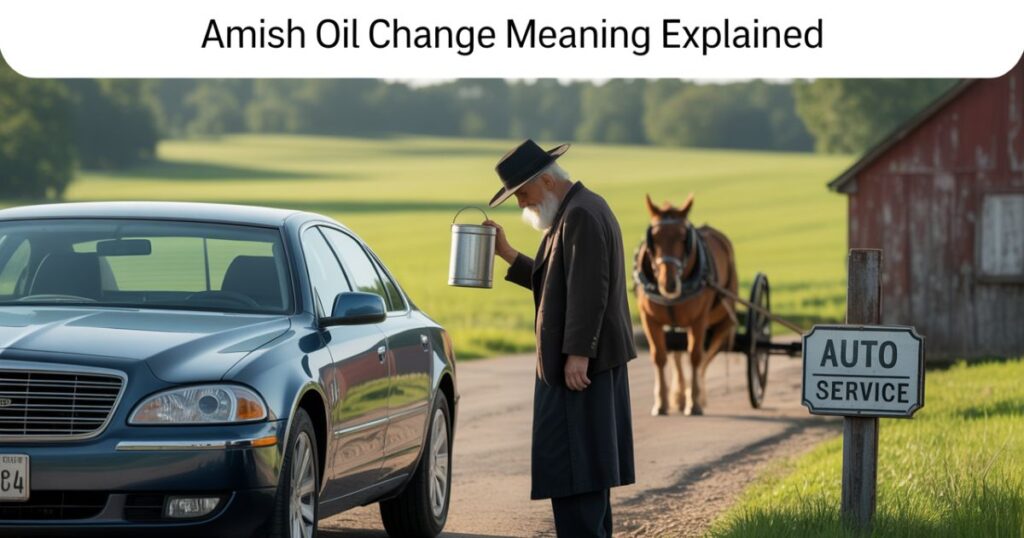
Ever heard someone mention an “Amish oil change” and wondered what they’re talking about? You’re not alone in your confusion here. This bizarre phrase has been popping up everywhere lately. TikTok videos explain it. Reddit threads debate it endlessly and relentlessly. Your mechanic buddy might’ve even referenced it recently. But what does this quirky term actually mean?
Here’s the thing it’s not what you’d expect at all. The phrase combines Amish lifestyle choices with modern automotive humor in unexpected ways. Some people use it as internet slang nowadays. Others reference it as a genuine mechanic joke. The meaning of Amish oil change varies depending on context completely.
We’re diving deep into this cultural phenomenon today. You’ll discover its literal interpretation, humorous slang meaning, and why it’s trending in 2025. Plus, we’ll explore Amish technology beliefs and maintenance practices. Let’s unpack this viral term together right now.
What Is an Amish Oil Change?
The phrase “Amish oil change” creates immediate confusion initially. It sounds straightforward but carries multiple meanings simultaneously. Most people scratch their heads when they first encounter it online.
The Amish community rarely relates to automotive humor or car maintenance jokes. They don’t drive personal vehicles in most communities. So combining “Amish” with “oil change” seems nonsensical. That’s exactly what makes it meme-worthy and memorable.
Understanding requires looking at both technical definitions and cultural slang examples. The term exists in two distinct worlds completely. One involves actual mechanical processes and automotive maintenance. The other belongs to internet meme culture entirely.
Literal Meaning

In strict technical terms, an oil change means draining old motor lubricant and adding fresh fluid. Modern cars need this service every 3,000-7,500 miles regularly. Your Tesla or Chevy depends on it for engine health.
However, the Amish generally avoid motorized vehicles altogether completely. Most communities use horse-drawn buggies for daily transportation needs. Personal automobile ownership contradicts their core values fundamentally. Therefore, an actual “Amish oil change” couldn’t exist logically.
It’s like saying “vegetarian steakhouse” or “silent rock concert.” The phrase contradicts itself by design intentionally. This linguistic impossibility creates the foundation for humor. The ironic automotive expression plays on cultural contrasts beautifully.
Humorous & Slang Meaning
Here’s where things get interesting and unexpectedly complex. Online communities adopted “Amish oil change” as modern slang. The phrase often means doing absolutely nothing at all.
Think about the logic behind this mechanic slang term. The Amish don’t drive cars typically in communities. So their “oil change” would involve zero actual work. Some forums use it mockingly to describe laziness. Others employ it for situations requiring minimal effort.
The phrase evolved into comedic commentary about avoidance. It reflects our culture’s fascination with traditional communities. Mechanics on YouTube share car repair fails using this terminology. r/Justrolledintotheshop on Reddit features it in mechanic humor posts regularly.
The Amish oil change slang works on multiple levels simultaneously. It references both the impossibility and the irony. Modern slang phrases in 2025 often carry these layered meanings.
The Amish and Technology: Why Traditional Oil Changes Don’t Apply
The Amish maintain strict religious and cultural guidelines carefully. These principles shape their relationship with modern technology fundamentally. Most Amish communities reject automobiles as unnecessary luxuries completely.
They believe cars promote individualism over community values strongly. This philosophical stance eliminates any need for oil changes. Understanding their worldview helps explain the term’s deep irony.
The Amish lifestyle and technology relationship isn’t about rejection entirely. It’s about careful selection and deliberate choice instead. They evaluate each technology’s impact on Amish community lifestyle thoroughly.
Do the Amish Use Vehicles?

Short answer? Rarely, and with significant restrictions attached always. Most Amish people travel via horse-drawn buggies exclusively. This Amish transportation method preserves their values and community bonds.
Some communities permit riding in motorized vehicles occasionally. However, they typically won’t own or drive them personally. Emergency situations might warrant hiring a non-Amish driver. Business needs sometimes create exceptions to the strict rule.
But personal car ownership remains largely forbidden everywhere. Each Amish community establishes its own specific guidelines. The “English lifestyle” (meaning non-Amish) includes automobiles freely. The Amish consciously choose a different path instead.
Progressive communities might allow battery-powered golf carts. Others permit hiring rides for medical emergencies only. Youth during Rumspringa may temporarily use modern vehicles. But these remain exceptions rather than standard practice.
Why Do the Amish Avoid Cars?
Their reasoning goes deeper than simple tradition alone. The Amish believe cars create harmful social dynamics. Automobiles enable people to scatter geographically and widely. This dispersal weakens community bonds over time gradually.
Horse-and-buggy travel keeps everyone close together physically. It reinforces mutual dependence and regular social interaction. Cars also symbolize pride and status competition. The Amish reject such materialistic displays consistently and firmly.
Their Amish cultural values prioritize humility, simplicity, and communal harmony. Grid electricity and gasoline-powered machinery threaten these principles directly. Televisions and radios would introduce outside influences constantly.
The decision reflects theological beliefs about separation. They want to remain distinct from mainstream society. Off-grid Amish living preserves their unique cultural identity.
How the Amish Maintain Their Equipment Without Oil Changes
Just because they avoid cars doesn’t mean zero maintenance. The Amish use plenty of mechanical equipment daily. Buggies, farm tools, and machinery require regular care.
They’ve developed sophisticated maintenance systems over generations successfully. Traditional lubrication methods keep everything functioning properly and smoothly. Their knowledge rivals any modern mechanic’s expertise.
Buggy Maintenance & Lubrication
Horse-drawn buggies need consistent upkeep and careful attention. Wheel bearings require greasing every few months regularly. Axles get treated with traditional lubricants like tallow. Metal joints receive regular oiling to prevent rust.
The Amish often use animal-based greases historically available. Modern Amish communities might purchase commercial lubricants occasionally. But application methods remain largely traditional and manual. They inspect buggies thoroughly before every significant journey.
Lantern oil (kerosene) serves lighting purposes in many homes. Hydraulic fluids maintain some permitted equipment types. This preventive approach ensures safety and longevity combined.
Farm Equipment & Tool Lubrication
Amish farms operate with impressive mechanical efficiency despite limitations. Plows, harrows, and cultivators all need proper lubrication. Many communities use diesel-powered equipment for farming purposes.
Yes, this surprises most people initially when discovered. Stationary diesel generators power barn equipment like milking machines. These machines absolutely require oil changes and maintenance. The Amish perform these tasks themselves competently and regularly.
Compressed air (pneumatics) powers many tools in workshops. Hydraulic systems operate without requiring grid electricity connections. Water-powered machinery uses innovative engineering principles creatively. Some progressive communities even experiment with solar panels carefully.
Possible Origins of the Term “Amish Oil Change”

Where Did This Phrase Come From?
Pinpointing exact origins proves difficult and somewhat elusive. The term likely emerged from internet culture gradually. Early 2000s forums discussing Amish lifestyle sparked curiosity.
People found the juxtaposition inherently humorous and ironic. Memes comparing traditional and modern living proliferated online. “Amish oil change” became shorthand for the contradiction. It represents our fascination with their alternative lifestyle.
The phrase reflects broader cultural commentary about technology. We’re simultaneously drawn to and puzzled by simplicity. Mechanics probably coined it first in automotive forums. Then social media amplified it into mainstream awareness.
Internet memes thrive on cultural contrast and sarcasm combined. This phrase hits both targets perfectly and memorably.
Modern Usage & Popularity
The term gained significant traction recently in 2025. Social media platforms feature “Amish oil change” content regularly. TikTok videos explain the phrase to confused viewers. Reddit threads debate its meaning and appropriateness thoroughly.
Some people use it as genuine slang now. Others reference it ironically or sarcastically instead. The phrase appears in casual conversations increasingly often. It’s become part of internet linguistic evolution naturally.
Automotive meme culture embraced it wholeheartedly and enthusiastically. Car maintenance jokes now include this reference routinely. Facebook, Pinterest, and WhatsApp share these meme-worthy car jokes constantly.
The “Amish oil change TikTok” trend reached millions of views. Young people adopted it as shorthand for minimal-effort solutions. Trending phrases in 2025 often carry this ironic edge.
Read This Post: Fein Definition: Meaning, Usage, and Polite Alternatives to ‘Hiatus’
Common Misconceptions About Amish Oil Changes
1. Do the Amish Ever Use Oil?
Absolutely yes, just not for personal automobiles typically. They use various oils and lubricants extensively daily. Cooking oils feature prominently in traditional Amish cuisine. Lamp oils provided lighting before modern alternatives arrived.
Machine oils maintain farm equipment and stationary engines. Leather treatments often incorporate oil-based products regularly. The misconception assumes they reject all oils entirely. In reality, they just avoid specific modern applications.
2. Do the Amish Repair Modern Vehicles?
This surprises many people initially when learning it. Some Amish communities include skilled mechanics and craftsmen. They might repair vehicles for non-Amish customers commercially.
This provides income without requiring personal ownership contradiction. However, they won’t typically drive the vehicles personally. The work remains business-focused rather than lifestyle-related directly.
3. Do Amish People Have Any Modern Machines?
More than most people realize or expect honestly. Many Amish communities use pneumatic tools powered by compressed air efficiently. Diesel generators provide stationary power for specific applications.
Gas-powered equipment appears on farms under certain conditions. The key distinction involves electricity from public grids. Battery-powered tools sometimes receive approval from church leaders. Technology isn’t completely rejected it’s carefully regulated and considered.
Why the Term “Amish Oil Change” Stuck Around

Language evolves through cultural fascination and human creativity. The Amish represent an alternative lifestyle that intrigues mainstream society deeply. Their rejection of modern convenience seems almost supernatural.
This creates perfect conditions for memorable phrases naturally. “Amish oil change” combines contradiction with cultural commentary effectively. It’s easy to remember and surprisingly versatile.
The phrase works as both literal impossibility and metaphorical commentary simultaneously. Internet culture loves these layered meanings enormously. Online mechanic humor thrives on such creative wordplay.
Growing interest in minimalist and sustainable lifestyles also fuels curiosity. People wonder about off-grid living possibilities increasingly. The Amish provide a real-world example.
FAQ’s
Is “Amish oil change” offensive to Amish people?
Most Amish communities remain disconnected from internet humor expressions. They’re unlikely to encounter or care about it. However, using their culture for jokes deserves respectful consideration.
What does “Amish oil change” mean on TikTok?
Usually it references doing absolutely nothing at all. It’s become slang for avoiding necessary maintenance entirely.
Do Amish buggies need any lubrication?
Yes, definitely and quite regularly too actually. Wheel bearings, axles, and joints require proper greasing.
Why do people find this term funny?
The inherent contradiction creates immediate humor naturally. Combining “Amish” with “oil change” juxtaposes tradition and modernity.
Conclusion
The “Amish oil change” phenomenon reveals something fascinating actually. It shows how internet culture creates meaning through juxtaposition. The phrase works because it combines contradictory concepts.
Understanding requires appreciating both Amish culture and internet slang linguistics. The Amish maintain their values through careful technology selection. They’re not anti-progress they’re deliberately traditional by choice.
So next time someone mentions an “Amish oil change,” you’ll know exactly what they mean. You understand the cultural context and humorous undertones. The phrase isn’t just meaningless internet nonsense.
The term will likely stick around for years ahead. It perfectly captures our conflicted relationship with technology. We simultaneously embrace and question modern conveniences constantly. And sometimes, the best “oil change” means questioning why we need one at all.

Flairsy is the word expert behind Englishfixerr.com, helping readers find the perfect synonyms and simple word choices. With a love for clarity and creativity, Flairsy makes English easy and stylish. From tricky terms to everyday phrases, he turns confusion into confidence.