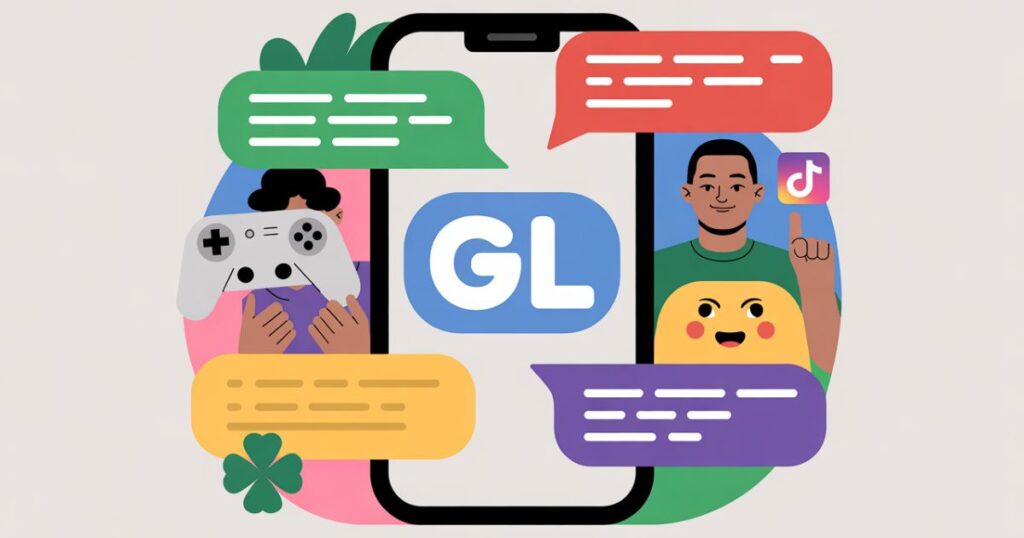
Ever gotten a text that just said “GL” and wondered what your friend meant? You’re not alone. Digital communication is packed with abbreviations, and GL stands as one of the most versatile shorthand terms across platforms.
Whether you’re crushing it in gaming, texting a friend, or scrolling through social media, understanding what GL means can save you from awkward misunderstandings.
Let’s dive deep into this popular abbreviation. You’ll discover its meanings, origins, and exactly how to use it like a pro.
Meaning & Definition of GL in Text
GL primarily means “Good Luck.” Simple as that. When someone types GL in a message, they’re wishing you success in whatever you’re doing. It’s the digital equivalent of a thumbs-up or an encouraging pat on the back.
But here’s where it gets interesting. The GL abbreviation doesn’t stop there. Context determines everything in the world of internet slang. In accounting circles, GL represents General Ledger. Programmers might reference Graphics Library (OpenGL). Scientists occasionally use it for Gigaliter, a unit measuring massive water volumes.
The beauty of texting abbreviations lies in their efficiency and speed. Instead of typing out “Good Luck” every single time, you save precious seconds. Those milliseconds add up when you’re firing off dozens of messages daily.
Most commonly though? You’ll see GL meaning Good Luck in chat across WhatsApp, Instagram, TikTok, Snapchat, and Discord. Gaming communities absolutely thrive on this term. It’s become gaming etiquette 101.
Background & Origin of GL
The GL slang meaning emerged from early internet chatrooms. Picture the late 1990s: dial-up connections, slow typing speeds, character limits everywhere. People needed faster ways to communicate digitally.
IRC (Internet Relay Chat) users pioneered abbreviated language. Typing “Good Luck” felt tedious when you could just type GL. Efficiency won over formality. The term spread like wildfire through online multiplayer games in the early 2000s.
Gaming communities embraced GL wholeheartedly. Before matches started, players typed GL to opponents. It demonstrated sportsmanship and respect. Eventually, GLHF (Good Luck, Have Fun) evolved as an extended version.
SMS limitations accelerated abbreviation adoption too. Remember 160-character text message limits? Every letter counted back then. Texting slang glossary expanded rapidly as mobile phones became ubiquitous.
Social media platforms cemented GL’s place in digital communication slang. Twitter’s original 140-character limit? Perfect breeding ground for shorthand. Instagram comments, Snapchat streaks, TikTok replies GL infiltrated them all.
Usage in Different Contexts

Casual Texting and Chats
In everyday conversation, GL feels warm and supportive. Your friend has a job interview? “GL tomorrow!” Your sister’s taking her driving test? “GL! You’ve got this!”
The tone stays friendly and encouraging. It’s informal yet sincere. Family group chats frequently feature GL during exam seasons (May/June, November/December). Parents wish kids well before tests.
Here’s a real example:
- Friend: “Got my presentation at 2pm 😰”
- You: “GL! You’ll crush it 💪”
Notice how casual chat language flows naturally? That’s the sweet spot. GL works beautifully in these scenarios because it’s quick, genuine, and supportive.
WhatsApp conversations especially love GL. International users adopt it regardless of native language. It’s become a universal encouragement symbol in messaging acronyms.
Gaming
Gaming transformed GL into essential vocabulary. Before competitive matches start, typing “GL” to opponents shows respect. It’s proper gamer slang etiquette.
“GLHF everyone” appears in virtually every online multiplayer game. League of Legends, Fortnite, Valorant, Call of Duty you name it. The phrase signals good sportsmanship before battle begins.
Discord servers overflow with GL variations. Gaming communities bond over these shared expressions. Streamers say GL to viewers attempting challenges. Esports professionals exchange GL before tournaments.
The abbreviation creates positive competitive environments. Even when you’re about to demolish your opponent, GL maintains friendly atmosphere. It’s the digital handshake before the match.
Professional Communication
Tread carefully here. GL in workplace settings depends entirely on company culture. Startups and tech companies? Probably fine. Traditional corporate environments? Maybe stick with “Best of luck.”
Some appropriate professional scenarios:
- Wishing colleagues well before presentations
- Encouraging team members before client pitches
- Supporting coworkers during interview processes
Email versus instant messaging matters too. Slack messages might welcome GL. Formal emails to executives? Probably not. Know your audience always.
Generational differences play huge roles. Younger colleagues might appreciate GL’s casual warmth. Older executives might find it unprofessional. When uncertain, choose full phrases: “Wishing you success” or “All the best.”
Science & Tech
Technical fields assign GL completely different meanings. In programming, Graphics Library (specifically OpenGL) refers to APIs for rendering graphics. Developers discuss GL contexts without any “good luck” connotation.
Accountants live and breathe General Ledger. “Update the GL before month-end” means something entirely different than wishing someone well. The GL accounting meaning tracks all financial transactions for businesses.
Scientists measuring water volumes use Gigaliter. Environmental reports reference GL when discussing reservoir capacities or river flows.
Context prevents confusion here. A programmer saying “I’m working on GL implementation” clearly isn’t wishing anyone luck. Professional jargon operates differently than casual texting abbreviations.
Meanings Across Platforms
| Platform | Primary Meaning | Usage Context |
|---|---|---|
| Good Luck | Comments, DMs, Stories | |
| Snapchat | Good Luck | Streaks, quick messages |
| TikTok | Good Luck | Supportive comments |
| Good Luck | Personal and group chats | |
| Discord | Good Luck | Gaming servers primarily |
Instagram users drop GL in comment sections constantly. Someone posts about auditions? “GL!! 🍀” floods the comments. Stories announcing big events get DM responses filled with encouragement.
On Snapchat, GL appears in streak conversations and snaps. Quick bursts of support between friends. The GL meaning on Snapchat stays consistently positive and brief.
TikTok creators receive GL comments before challenges. Viral trends often inspire supportive audiences typing encouragement. The GL meaning on TikTok reinforces community bonding.
Discord servers, especially gaming-focused ones, use GL religiously. Every match start, every raid attempt, every competitive session begins with GL exchanges.
Common Misconceptions & Mistakes
People sometimes confuse GL with similar abbreviations. Mixing up GL and GG (Good Game) happens frequently. GL comes before the activity; GG comes after.
Autocorrect creates hilarious fails. “GL” might become “Gel” or “Glad” unexpectedly. Always proofread quick messages to avoid confusion.
Cross-generational communication gaps emerge too. Grandparents might not recognize internet slang terms. They’ll respond with “What does GL stand for?” Be patient and explain when needed.
Overusing GL diminishes sincerity. Typing it for every tiny thing makes it feel mechanical. Save it for genuinely meaningful moments. Quality over quantity applies to digital encouragement too.
Assuming universal understanding across cultures causes problems. Some regions prefer different encouragement phrases. BOL (Best of Luck) or ATB (All the Best) might resonate better internationally.
Similar Terms & Alternatives
When exploring the world of texting abbreviations, GL doesn’t exist in isolation. Dozens of similar encouragement phrases populate digital communication. Understanding alternatives helps you diversify your vocabulary and match different situations perfectly.
GLHF (Good Luck, Have Fun) extends GL’s meaning beautifully. Gaming communities prefer this expanded version. It combines encouragement with enthusiasm for the experience itself. You’ll see GLHF everywhere in online multiplayer games.
BOL (Best of Luck) offers slightly more formality. When GL feels too casual but “Good Luck” seems too stiff, BOL hits the sweet spot. Professional settings occasionally welcome this middle-ground option.
ATB (All the Best) works wonderfully for broader situations. Unlike GL’s specific pre-event timing, ATB applies to general well-wishes. Someone moving cities? Starting new jobs? ATB covers these scenarios gracefully.
Here’s a comparison table showing usage differences:
| Abbreviation | Full Form | Formality Level | Best Context |
|---|---|---|---|
| GL | Good Luck | Casual | Gaming, friends, quick texts |
| GLHF | Good Luck, Have Fun | Casual | Gaming specifically |
| BOL | Best of Luck | Semi-formal | Professional-lite settings |
| ATB | All the Best | Formal | Professional emails |
| GI | Good Idea | Casual | Brainstorming, approvals |
“Fingers crossed” provides another alternative without abbreviations. It’s conversational and warm. Similarly, “Wishing you success” maintains professionalism while showing genuine support.
GG (Good Game) confuses people sometimes. But here’s the difference: GL comes before activities; GG comes after. GL = anticipation. GG = reflection.
BRB (Be Right Back), BTW (By The Way), and LOL (Laugh Out Loud) share GL’s abbreviated DNA. They’re part of the larger texting slang glossary that makes digital communication faster and friendlier.
The beauty lies in choosing appropriately. Tech startup Slack channel? GL works great. Email to potential investors? “All the best with your decision” sounds infinitely better.
How to Respond to GL
Responding appropriately matters. Simple acknowledgments work perfectly:
- “Thanks!”
- “You too!”
- “Appreciate it! 🙏”
- “Thx, I’ll need it 😅”
Match the energy level. Casual GL gets casual response. Gaming GLHF deserves “GL HF” back. Mirror the tone your conversation partner sets.
Emoji combinations enhance responses beautifully. Four-leaf clovers 🍀, flexed biceps 💪, or praying hands 🙏 pair wonderfully with thanks.
Sometimes silence works fine too. Acknowledging every GL isn’t mandatory. Reading without responding shows you saw their encouragement.
Differences From Similar Words
People constantly mix up GL with related abbreviations. Let’s clear confusion once and for all. Understanding these distinctions prevents awkward messaging mishaps.
GL vs. GG: This trips up newcomers constantly. GL means “Good Luck” and appears before events start. GG means “Good Game” and shows up after matches end. Gaming etiquette demands proper timing. Typing GG before a game starts? That’s basically admitting defeat prematurely.
GL vs. GLHF: GLHF simply extends GL’s meaning. It adds “Have Fun” to “Good Luck.” GLHF carries slightly more warmth and enthusiasm. Competitive gamers often prefer GLHF because it balances competitiveness with enjoyment. GL alone works fine for quick exchanges.
GL vs. Full Phrases: Why abbreviate at all? Speed and casualness. “Good Luck” takes more effort and feels slightly formal. GL maintains intimacy while respecting everyone’s time. It’s the difference between a handshake and a fist bump same sentiment, different energy.
GL vs. HF: Some gamers type “HF” (Have Fun) separately. The difference? GL focuses on outcome and success. HF emphasizes enjoyment and experience. Together as GLHF, they create perfect balance.
Consider timing differences too:
- GL: Before job interviews, exams, first dates
- BOL: Professional correspondence, serious situations
- ATB: General well-wishes, long-term endeavors
- GA (Good Afternoon): Time-specific greetings only
Context determines everything in common internet slang. A programmer discussing Graphics Library means something completely different than a gamer typing GL before a match. The GL definition shifts based on surrounding conversation.
Platform preferences vary too. Discord servers overflow with GLHF. Instagram comments lean toward simple GL. WhatsApp messages from older relatives might spell out “Good Luck” entirely. Adapt to your audience always.
Read This Article: Unpacking “BBW” in Text: Meaning, Origins, and Modern Usage Explained
Relevance in Online Conversations & Dating Apps
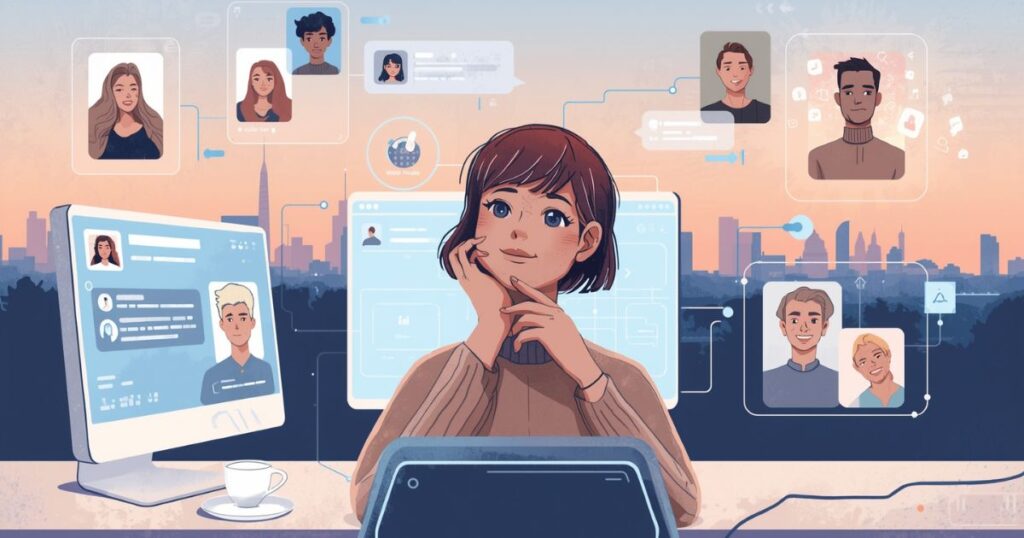
Dating apps feature GL surprisingly often. On Tinder, Bumble, and Hinge, people wish matches luck before first dates. “GL with your interview tomorrow!” builds genuine rapport.
It signals you’re listening and care. Remembering details matters in dating. When your match mentioned something important, circling back with GL demonstrates attentiveness.
Green flags versus red flags: GL typically indicates sincere interest. Someone investing emotional energy to wish you well probably likes you. Conversely, constant GL without deeper conversation might signal superficial engagement.
Gender differences in interpretation? Honestly, not really. GL means the same from anyone. Context and relationship status matter infinitely more than who sends it.
Popularity & Trends Over Time
GL’s journey through digital communication history reveals fascinating patterns. Google Trends data shows consistent usage since the early 2000s, with specific spikes during exam seasons and major esports tournaments.
The late 1990s birthed GL in IRC chatrooms. Early adopters were tech-savvy gamers and forum dwellers. Usage remained niche until SMS texting exploded in the mid-2000s. Suddenly, everyone needed shorthand.
Social media platforms accelerated adoption dramatically. Twitter’s launch in 2006 made abbreviations essential. Instagram (2010), Snapchat (2011), and TikTok (2016) continued this trend. Each platform’s character limitations or fast-paced nature favored brief expressions.
Gaming’s mainstream evolution pushed GL further. Esports viewership rivals traditional sports now. Millions watch professionals exchange “GLHF” before matches. Twitch streamers use GL constantly with audiences. This visibility normalized the abbreviation beyond gaming circles.
Generational adoption rates vary significantly:
- Gen Z: GL is second nature, used effortlessly
- Millennials: Comfortable with GL, early adopters
- Gen X: Mixed usage, depends on digital literacy
- Boomers: Often prefer full phrases still
COVID-19’s impact on digital communication habits cannot be overstated. Remote work, virtual classes, online socializing everything shifted digital. Texting abbreviations list grew longer as people communicated more through screens than ever before.
Current trends show GL maintaining steady popularity. Unlike fleeting viral slang, GL demonstrates staying power. It serves genuine functional purposes rather than just being trendy. That’s why it survives while other terms fade.
Geographic patterns emerge too. English-speaking countries dominate GL usage, but it’s spreading globally. Non-native English speakers adopt common digital abbreviations as universal internet language. GL transcends linguistic barriers effectively.
Future predictions? GL isn’t going anywhere. As long as people need quick encouragement digitally, this abbreviation thrives. Voice messaging might reduce some text abbreviations eventually, but GL’s simplicity ensures longevity. It’s become embedded in internet culture terminology permanently.
Academic researchers studying messaging acronyms note GL’s unique position. It combines efficiency with emotional support a rare combination that explains its enduring relevance across platforms, generations, and contexts.
FAQs About GL in Text
What does GL mean in slang?
In common internet slang, GL stands for “Good Luck.” It’s encouragement before challenges, tests, competitions, or important events. The good luck abbreviation appears across all social media platforms and messaging apps universally.
What does GL mean on Snapchat?
The GL meaning on Snapchat remains “Good Luck.” Friends use it in streaks, snaps, and direct messages. It’s quick, supportive, and fits Snapchat’s fast-paced communication style perfectly. You’ll see it before exams, interviews, or dates.
What does GL mean in Character AI?
In Character AI conversations, GL typically means “Good Luck” too. Users role-playing scenarios might exchange GL contextually. The AI understands common chat abbreviations and responds appropriately within conversation flow.
What does GL mean in text from a girl?
No inherent difference exists. GL from anyone regardless of gender means “Good Luck.” Read the overall conversation tone instead. Is she supportive generally? Then GL reflects genuine care. Don’t overthink abbreviations based on sender gender.
What does GL stand for in accounting?
In finance and accounting, GL means General Ledger. It’s the master record of all financial transactions for a business. Accountants reference GL when discussing bookkeeping, financial statements, or transaction tracking. Completely different from the texting slang meaning.
Conclusion
Understanding the GL meaning in text opens doors to better digital communication. Whether you’re gaming, texting friends, or navigating social media, this versatile abbreviation serves countless purposes.
Good Luck remains its primary definition. Remember context distinguishes between encouragement and technical terminology. Gaming communities, casual chats, and social platforms all embrace GL’s efficiency.
Use it confidently but thoughtfully. Match your audience’s formality level. Respond appropriately when receiving GL. And most importantly? Mean it when you type it.
Digital communication habits constantly evolve. Texting trends come and go. But GL? This abbreviation has staying power. It’s simple, genuine, and universally understood.
Now you’re equipped to use GL perfectly. Whether wishing friends success or understanding professional contexts, you’ve got this covered. GL with all your future conversations! 🍀

Flairsy is the word expert behind Englishfixerr.com, helping readers find the perfect synonyms and simple word choices. With a love for clarity and creativity, Flairsy makes English easy and stylish. From tricky terms to everyday phrases, he turns confusion into confidence.