You just got a text. It says “wtm?” and you’re staring at your screen wondering what your friend actually wants. Sound familiar? You’re not alone in this digital confusion.
Modern texting culture moves fast. Abbreviations pop up daily. They vanish just as quickly. But some stick around. WTM is one of them.
Here’s why this matters. Misreading WTM can lead to awkward moments. You might respond too formally to a casual hangout invite. Or worse—you could miss a friend reaching out for support.
This guide cuts through the confusion. We’ll explore wtm meaning in text, show you real examples, and teach you when to use it (and when to avoid it). By the end, you’ll text with confidence. You’ll understand the subtle tones. You’ll know exactly how to respond in any situation.
Let’s decode this modern texting abbreviation together.
What Does “wtm” Mean in Text?
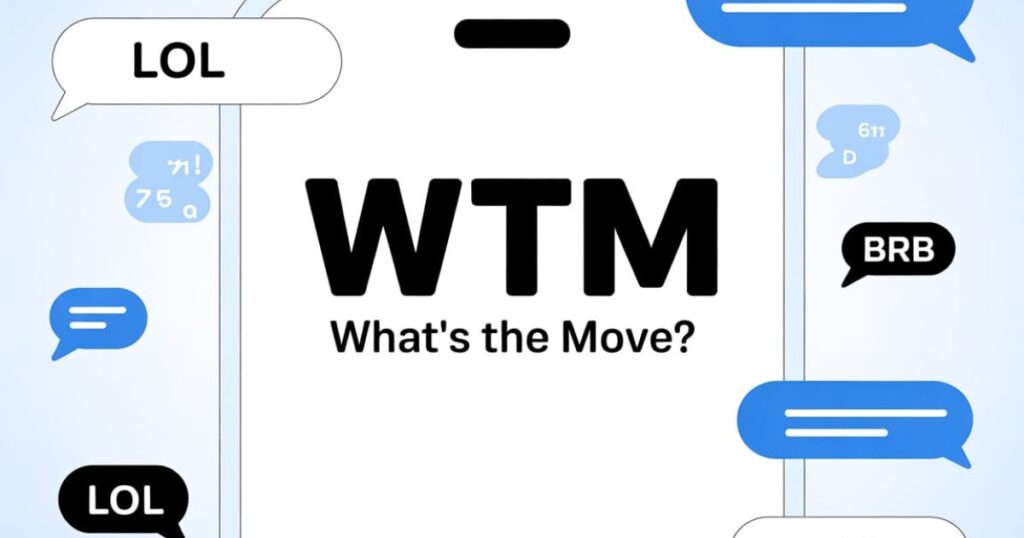
WTM stands for “What’s the Move?”
Think of it as a casual way to ask:
- What are we doing tonight?
- What’s the plan?
- What’s happening right now?
- Got any ideas for later?
The wtm text meaning dominates Gen Z conversations. Millennials use it too. It’s become universal shorthand for making plans without sounding too formal or too eager.
Check out this example:
Friend: “Wtm tonight?” You: “Thinking pizza and a movie. You down?”
See how natural that flows? The abbreviation saves time. It keeps things light. It invites conversation without pressure.
But here’s the thing. Context changes everything. Sometimes wtm means something entirely different. That’s where confusion starts.
Other Interpretations of WTM (Less Common)
While “What’s the Move?” dominates, wtm meaning in chat can shift depending on context. Here are alternative interpretations:
Alternative WTM Meanings:
| Meaning | Context | Usage Example |
|---|---|---|
| What’s the Matter? | Showing concern | “You’ve been quiet… wtm?” |
| Worth the Money | Shopping/reviews | “This laptop costs $1,200. Is it wtm?” |
| Way Too Much | Expressing overload | “Five meetings today? That’s wtm.” |
| Watch the Movie | Entertainment plans | “New Marvel film dropped. Wtm tonight?” |
The wtm abbreviation meaning you choose depends entirely on surrounding words and relationship dynamics. A close friend texting “wtm?” at 3 PM probably wants to hang out. The same text at midnight after you posted something sad? They’re checking if you’re okay.
Why Understanding “wtm” Matters in 2025
Digital literacy isn’t optional anymore. It’s essential for connection.
Consider these facts:
- Americans send over 2 trillion texts annually
- 97% of smartphone users text regularly
- Gen Z prefers texting over phone calls by 3:1
When you don’t understand texting trends 2025, you risk:
- Missing social invitations completely
- Appearing out of touch professionally
- Creating generational communication gaps
- Losing networking opportunities
Professional impact matters too. Creative industries now use casual language in Slack channels. Knowing when wtm fits (and when it doesn’t) shows emotional intelligence.
Plus, understanding Gen Z texting culture helps parents connect with kids. It helps managers relate to younger employees. It bridges the divide between digital natives and everyone else.
Why Do People Use “WTM”?
People choose wtm slang meaning for specific psychological reasons:
Key Motivations:
- Speed – Types in seconds, not minutes
- Casualness – Removes formal pressure from conversations
- Safety – Tests interest without seeming too eager
- Belonging – Signals membership in modern texting culture
- Efficiency – Gets straight to planning without small talk
Think about it this way. Saying “Hello! I hope you’re having a wonderful evening. I was wondering if you might be interested in perhaps making some plans for later tonight?” sounds stiff.
Compare that to: “Wtm tonight?”
The second version feels friendly, light, and natural. It invites a yes without demanding commitment. That’s why it works.
Contextual Nuance: How Tone and Timing Shape Meaning
Here’s where things get interesting. The same three letters carry completely different weight depending on who sends them and when.
1. Casual Inquiry
Saturday afternoon, 2 PM
When your friend texts “wtm?” during weekend hours, they’re making plans. Simple as that.
Example exchange: Friend: “Wtm?” You: “Beach or downtown?” Friend: “Beach sounds perfect”
Notice the relaxed energy? No pressure. Just friends coordinating.
2. Romantic Interest
Late night, 11:30 PM
Your crush texts “wtm?” and suddenly everything feels different. The timing matters. Late-night texts carry flirty undertones.
Example: Crush: “Wtm? 😏” You: “Was just thinking about you actually”
The emoji adds context. The timing suggests interest beyond friendship. This is where reading between the lines becomes crucial.
3. Concern
After you post something vague on social media
You tweet: “Sometimes I wonder…”
Friend: “Wtm? You good?”
Here, wtm shifts to “What’s the matter?” The context changed everything. Your friend noticed something felt off. They’re checking in.
4. Sarcasm or Judgment
In a group chat about someone’s bad decision
Friend 1: “Jake bought another NFT” Friend 2: “Wtm… 💀”
This usage drips with skepticism. It means “Whatever That Means” or “I can’t believe this.” The skull emoji reinforces the negative tone.
14 Ideal Replies to “WTM” (Based on Context)
Knowing how to respond to wtm separates smooth communicators from confused ones.
✅ Casual Responses
Use these with friends and peers:
- “Not much, just chilling. You?” – Keeps conversation flowing
- “Trying to figure that out. Any ideas?” – Invites them to suggest plans
- “Same question back at you!” – Playful and engaging
- “Thinking tacos and that new arcade spot” – Offers specific plan
- “Whatever sounds fun honestly” – Shows flexibility
💬 Professional or Polite Alternatives
For colleagues or acquaintances:
- “Just wrapping up some work. Did you have something specific in mind?” – Professional but warm
- “Available after 6 PM if you’re thinking of meeting up” – Sets clear boundaries
- “Good timing actually—was about to reach out” – Shows appreciation
- “Nothing concrete yet. What were you considering?” – Polite deflection
❤️ Romantic or Flirty Replies
When someone you’re interested in texts:
- “Depends—are you part of the plan? 😊” – Flirty and direct
- “Was hoping you’d ask” – Shows interest without desperation
- “Whatever involves you sounds good” – Clearly romantic
- “You tell me, I’m flexible tonight” – Opens door for them to lead
🧘 Reflective or Chill
Low-pressure responses:
- “Just vibing honestly. Keeping it low-key” – Calm and grounded
Advanced Alternatives to Say Instead of “WTM”
Sometimes you need more clarity than wtm provides. Here are professional alternatives to wtm and casual upgrades.
🧑💼 Professional Settings:
- “What’s the agenda for today?”
- “Could you clarify our next steps?”
- “What’s on the schedule?”
- “Shall we finalize the plan?”
- “How should we proceed?”
These phrases maintain professionalism while still asking about plans. Perfect for Slack channels in creative companies.
👥 Casual Settings:
- “Any plans for later?”
- “What are we getting into?”
- “What’s the play tonight?”
- “You free this evening?”
- “What’s happening?”
These alternatives to wtm keep casual energy without using slang. Great for mixed-age friend groups.
💌 Polite or Respectful:
- “Would you like to get together later?”
- “Let me know if something comes up”
- “Happy to join if there’s anything happening”
- “Feel free to loop me in on plans”
Use these with acquaintances or networking contacts.
Polite, Professional, and Casual Alternatives to “wtm”
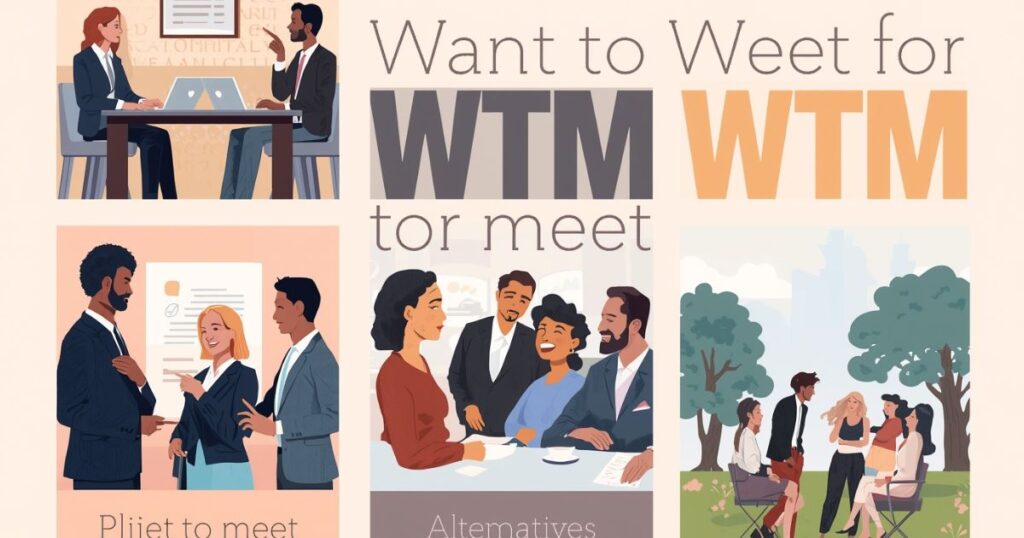
Let’s break this down further with specific scenarios.
1. Casual Alternatives (Friends & Social Media)
When to use: Weekend plans, group chats, close friends
Best options:
- “What’s up?”
- “What’s going on?”
- “Any moves tonight?”
- “What are we doing?”
- “Plans?”
2. Polite Alternatives (Respectful but Friendly)
When to use: Colleagues you’re friendly with, extended family, new friends
Best options:
- “What’s the plan?”
- “What do you have in mind?”
- “Any updates on tonight?”
- “What are we thinking?”
3. Professional Alternatives (Work & Formal Chats)
When to use: Managers, clients, formal meetings, email communication
Best options:
- “Could we review our timeline?”
- “What’s our next action item?”
- “Should we coordinate schedules?”
- “What’s the proposed approach?”
The Psychology of Using “WTM”
Digital communication creates emotional distance. We can’t see facial expressions. We miss vocal tone. That’s why abbreviations like wtm serve psychological purposes beyond mere convenience.
Emotional safety through casualness – Asking “What are your plans for tonight and would you perhaps like to spend time together?” feels vulnerable. Typing “wtm?” feels safer. If the person isn’t interested, the rejection stings less.
Testing interest without commitment – WTM lets you gauge someone’s availability without fully committing to specific plans. It’s a low-stakes inquiry.
Group inclusion signaling – Using wtm in group chats signals “I’m one of you.” It’s tribal language. It creates in-group belonging.
Read This Post: Keto Meaning Slang: Decoding Modern Lingo in 2025
Tone-Sensitive Replies: When to Use What
Match your response to the situation:
| Situation | Best Response Type |
|---|---|
| Close friend, weekend | Casual and spontaneous |
| Colleague, mid-week | Polite and professional |
| Romantic interest, evening | Warm and slightly flirty |
| Acquaintance, unclear intent | Neutral clarifying question |
| Family member (older) | Clear and specific (avoid slang) |
WTM in Social Media and Gen Z Slang
Wtm meaning Snapchat and wtm meaning on Instagram context differs from private texting.
On TikTok, wtm appears in comment sections:
- “New fit check. Wtm tonight? 🔥”
- “Just finished finals. Wtm this weekend?”
Snapchat stories use wtm as conversation starters. Someone posts a photo with “wtm?” overlaid. They’re inviting friends to suggest activities.
Instagram DMs see wtm in planning conversations, especially among Gen Z users coordinating group hangouts.
10 Best Examples of “wtm” in Text
Real scenarios show how versatile wtm truly is:
- “Saturday vibes. Wtm?” – Weekend planning
- “Everyone’s free tonight. Wtm squad?” – Group coordination
- “Been thinking about you… wtm? 😊” – Romantic interest
- “You seem off today. Wtm?” – Concerned friend
- “This jacket’s $200. Wtm though?” – Shopping evaluation
- “Wtm for dinner? I’m starving” – Food plans
- “New series dropped. Wtm tonight?” – Entertainment
- “Project’s done. Wtm for celebration?” – Achievement plans
- “Long week. Wtm for stress relief?” – Casual catch-up
- “Haven’t seen you in forever. Wtm?” – Reconnection
Choosing the Right Alternative: Tone & Nuance

Picking the right phrase instead of wtm requires social intelligence. You can’t just swap words randomly. You need to consider multiple factors.
Relationship proximity determines everything. Your best friend since childhood? Use wtm freely. Your manager’s boss? Absolutely not. The closer your relationship, the safer slang becomes.
Age gaps create communication barriers. Gen Z speaks one language. Baby Boomers speak another. Your grandmother probably won’t understand “wtm” at all. She might think you made a typo.
Consider this scenario:
You’re texting your 65-year-old uncle about Thanksgiving plans. Don’t text “wtm for Thursday?” Instead, try “What time should I arrive on Thursday?” Clear. Respectful. Age-appropriate.
Setting formality matters tremendously. Beach bonfire with college friends? “Wtm tonight guys?” works perfectly. Client dinner invitation? “What time works best for you?” sounds professional.
Your personal brand consistency counts too. If you’re building a professional reputation, even your casual texts should reflect that. You don’t want screenshots of unprofessional language circulating.
Quick decision guide:
- Family (older) → Full sentences, no slang
- Friends (same age) → Wtm works great
- Colleagues (creative field) → Casual alternatives okay
- Colleagues (corporate) → Professional alternatives only
- New relationships → Start formal, adjust based on their style
Here’s the truth. When you’re unsure, choose clarity over coolness. Nobody ever got offended by clear communication. But plenty of people misunderstand slang.
The Evolution of “wtm” in 2025
Language never stands still. It shifts constantly. Wtm definition 2025 looks different than it did even two years ago.
Back in 2018, wtm lived mostly on Snapchat. Gen Z teenagers used it exclusively. Millennials barely knew it existed. Fast forward to 2025? It’s everywhere.
AI integration changed everything. Smart scheduling apps now recognize when someone types “wtm” in group chats. They automatically suggest available times. They pull from connected calendars. Technology amplified the abbreviation.
Voice-to-text adoption increased too. People now speak “what’s the move” aloud instead of typing the letters. This creates interesting pronunciation patterns. Some say it as three letters: “W-T-M.” Others say the full phrase.
Workplace adoption patterns emerged unexpectedly. Tech startups embraced casual language first. Then creative agencies followed. By 2025, even some traditional companies see wtm in internal Slack channels—though never in client communications.
Regional variations developed across America. East Coast users tend toward “what’s the play?” West Coast leans into “what’s the vibe?” The South sometimes uses “what we doing?” But wtm remains universally understood.
Cross-generational usage increased dramatically. Millennials who initially resisted now use wtm regularly. Some Gen X parents picked it up from their teenagers. The generational communication gap narrowed slightly.
What’s coming in 2026? Expect even more AI integration. Expect new variations and spinoffs. Expect older generations to gradually adopt it. The evolution continues.
When Not to Use “wtm”
Knowing when to avoid wtm might be more important than knowing when to use it. Professional risks are real.
Never use wtm in these situations:
Formal email communications – Your inbox isn’t a group chat. Writing “Wtm for the quarterly meeting?” in an email to executives looks unprofessional. It suggests poor judgment.
Client-facing interactions – Clients pay for professionalism. They expect polished communication. One casual “wtm?” can damage carefully built credibility.
Job interviews and networking events – First impressions matter enormously. During a coffee chat with a potential employer, saying “So wtm after this?” sounds immature. Try “Do you have any other questions for me?” instead.
Serious or sensitive conversations – Someone just shared devastating news. Don’t respond with “Wtm? You okay?” The casualness feels dismissive. Say “I’m so sorry. How can I support you right now?”
Age-inappropriate audiences – Your professor, your doctor, your landlord—these people likely don’t speak Gen Z texting language. They might misunderstand completely. They might judge you negatively.
Warning signs to watch for:
- The person uses complete sentences consistently
- They’ve never used abbreviations with you
- The conversation topic is serious or formal
- You’re discussing money, health, or legal matters
- You’re communicating upward in a hierarchy
Real-world cautionary tale: A marketing intern texted their director “Wtm for the campaign launch?” The director didn’t know what it meant. She Googled it. She felt disrespected by the casualness. The intern didn’t get the promotion she wanted.
When in doubt, err on the side of formality. You can always become more casual later. You can’t undo a bad first impression.
Common Mistakes When Responding to WTM
Even people who understand wtm meaning in text make critical errors when replying. Avoid these pitfalls.
Mistake #1: Over-analyzing simple messages
Your friend texts “wtm tonight?” at 3 PM on Saturday. Don’t spend twenty minutes wondering what they really mean. They want to hang out. That’s it. Overthinking creates anxiety where none belongs.
Better approach: Respond within a reasonable time with a straightforward answer.
Mistake #2: Tone mismatches cause confusion
Someone sends a casual “wtm?” and you respond with a formal paragraph. The energy doesn’t match. It feels awkward.
Example of mismatch:
- Them: “Wtm?”
- You: “Hello! I appreciate you reaching out. I am currently evaluating my evening schedule and will provide you with a comprehensive response regarding potential activities.”
That response kills the vibe instantly.
Better version:
- Them: “Wtm?”
- You: “Probably just Netflix. You have something better?”
Mistake #3: Ignoring WTM seems rude
Even if you’re busy, not responding at all sends a message. It suggests you don’t value the person. It damages relationships over time.
Recovery strategy: Quick acknowledgment beats silence. “Busy tonight but let’s plan for tomorrow?” takes ten seconds to type.
Mistake #4: Forced slang sounds inauthentic
You normally speak formally. Suddenly you’re throwing around wtm and other texting abbreviations 2025 you don’t understand. People notice the inconsistency. It feels fake.
Be yourself. If slang doesn’t come naturally, use clear alternatives instead. Authenticity trumps trendy every time.
Mistake #5: Cultural assumptions create problems
Not everyone uses wtm the same way. Regional differences exist. Age differences matter. Cultural context shapes meaning.
Before-and-after correction examples:
Mistake: Assuming wtm always means “What’s the Move?” Correction: Check context first—could be concern or sarcasm
Mistake: Using wtm with international friends who don’t know American slang Correction: Ask “Any plans tonight?” in clear language
Mistake: Responding to concerned “wtm?” with party plans Correction: Recognize when someone’s checking if you’re okay
The biggest mistake? Assuming communication is simple. It’s not. Every text carries layers of meaning. Tone, timing, relationship history—all of it matters.
Master these nuances and you’ll navigate modern texting slang like a pro. You’ll avoid awkward misunderstandings. You’ll build stronger connections through clearer communication.
FAQ’s
Is WTM a new slang term?
Not exactly. WTM emerged around 2018-2019 among Gen Z communities. It gained mainstream traction during the pandemic when digital communication exploded. By 2025, it’s firmly established in texting trends.
What does WTM mean in Gen Z?
For Gen Z, wtm primarily means “What’s the Move?” It’s their go-to phrase for coordinating plans. They use it constantly on Snapchat, Instagram DMs, and group texts. It’s become fundamental to their digital communication style.
Is WTM appropriate to use?
Depends entirely on context. With friends? Absolutely. In professional emails to your boss? Definitely not. Creative workplaces might accept it in Slack. Traditional corporate environments won’t. Know your audience before using wtm.
What does WTM mean in text slang?
In text slang, wtm serves multiple purposes: asking about plans (“What’s the Move?”), expressing concern (“What’s the Matter?”), or evaluating purchases (“Worth the Money?”). Context determines which wtm definition applies.
Final Thoughts: Mastering WTM and Modern Text Etiquette
Understanding wtm meaning in text goes beyond memorizing three letters. It’s about reading social cues. It’s about adapting your communication style to match your audience.
Here’s what matters most:
Key takeaways:
- WTM primarily means “What’s the Move?”
- Context changes meaning dramatically
- Match your tone to your relationship
- Professional settings require alternatives
- Gen Z uses it naturally and frequently
Digital communication will keep evolving. New abbreviations will emerge. Some will fade. But the principles stay constant: read the room, respect your audience, and communicate authentically.
You’re now equipped to navigate wtm in any situation. Whether you’re texting friends, messaging colleagues, or chatting with romantic interests—you know exactly how to respond.
Communication mastery isn’t about knowing every slang term. It’s about understanding people. And now? You understand wtm completely.

Flairsy is the word expert behind Englishfixerr.com, helping readers find the perfect synonyms and simple word choices. With a love for clarity and creativity, Flairsy makes English easy and stylish. From tricky terms to everyday phrases, he turns confusion into confidence.